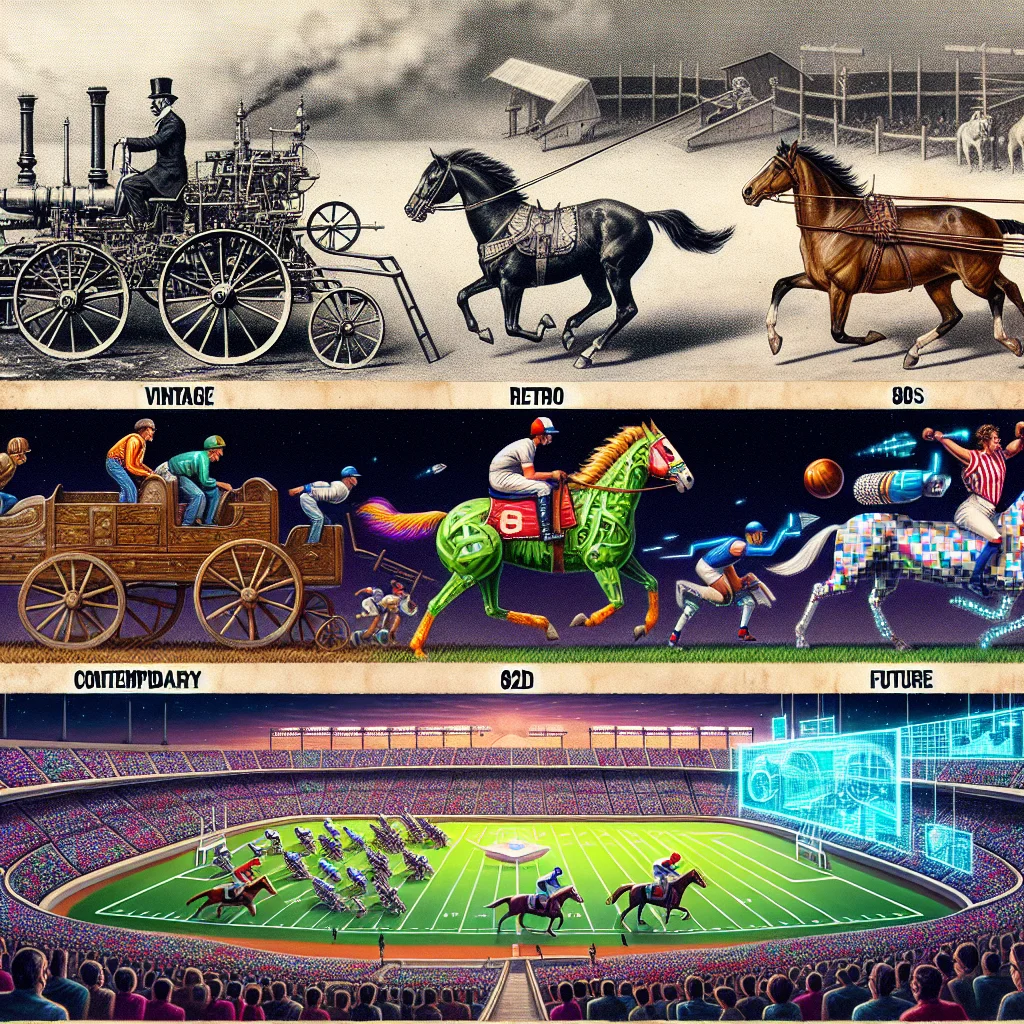
The Mechanical Genesis: Betting Before Computers
Long before pixels and algorithms, the seed of virtual sports was planted in the early 20th century with mechanical gambling devices. The most iconic precursor was the “horse racing” game found in fairgrounds and arcades. These were elaborate cabinets featuring miniature metal or wooden horses that moved along a track, powered by clockwork mechanisms or later, electric motors. Patrons would place bets on a numbered horse, a lever would be pulled, and the machines would whir into action, determining a winner through a combination of mechanics and chance. While primitive, these devices captured the essential spirit of virtual sports: a self-contained, mechanical simulation of a sporting event where the outcome was determined by the machine’s internal logic, independent of real animals or athletes. They proved the public’s appetite for betting on simulated contests.
The Digital Dawn: 1980s and the Rise of Video
The true birth of modern virtual sports coincided with the arcade and home computer revolution of the 1980s. The first recognizable digital virtual sports were extremely basic video simulations. Companies in Europe, particularly in Italy and the UK, began developing software that used Random Number Generators (RNGs) to simulate horse and greyhound races. The graphics were simple, blocky, and two-dimensional, often just colored blobs moving across a static background representing a track. These were initially deployed in dedicated betting terminals in licensed betting offices (LBOs). Their purpose was clear: to provide betting action during off-hours when no live racing was televised. Despite their visual simplicity, they were a revelation, offering a reliable, weather-proof product for bookmakers and a novel, fast-paced experience for bettors, establishing the core commercial model that persists today.
The 3D Revolution: Entering the Polygonal Arena
The 1990s and early 2000s witnessed a quantum leap fueled by the same technology driving the video game industry: 3D graphics acceleration. Virtual sports shed their 2D sprites for polygonal models. Horses, dogs, and players became three-dimensional objects with basic textures and smoother animation. This era saw the emergence of dedicated virtual sports software providers, like the pioneering Austrian company “Greentube” (then part of Novomatic). Their games, such as “Virtual Horse Racing,” became staples in betting shops and early online casinos. The presentation became more sophisticated, with multiple camera angles, simple crowd animations, and synthesized commentary. This period solidified virtual sports as a legitimate, standalone vertical within the gambling industry, moving beyond a mere filler to a product with its own dedicated fanbase. The focus shifted from pure functionality to creating a more engaging and visually believable spectacle.
The Online Explosion and Market Diversification
The proliferation of high-speed internet and online gambling in the 2000s was the catalyst for massive growth. Virtual sports transitioned from physical terminals to the web, becoming accessible to a global audience 24/7. This accessibility spurred intense competition among providers like Leap Gaming, Golden Race, and 1X2 Network. Innovation accelerated rapidly. Beyond horses and dogs, simulations expanded to include football, motorsports, cycling, and tennis. League structures and cup competitions were introduced, adding narrative depth. The graphical fidelity improved dramatically, with detailed textures, dynamic lighting, and more realistic physics. Crucially, this era saw the strict regulation and certification of RNGs, moving the product from a niche curiosity to a fully regulated gambling activity in markets like the UK, Malta, and Italy, underpinned by rigorous fairness testing.
The Modern Era: Hyper-Realism and Live Integration
Today’s virtual sports are products of cutting-edge technology. Game engines like Unity and Unreal Engine render near-photorealistic graphics. Motion capture from real athletes and animals provides fluid, authentic animations. The presentation is cinematic, with broadcast-style graphics, dynamic commentary from real voice artists, and immersive stadium atmospheres. A key trend of the modern era is integration with live betting. “Live virtuals” or “next-generation virtuals” feature events where odds fluctuate in real-time as the simulation unfolds, mirroring the live sports betting experience. Furthermore, virtual sports are now deeply embedded in online casino and sportsbook platforms, often featured alongside live dealer games and real sports markets, signifying their complete acceptance as a core product. The emphasis is on creating a seamless, high-quality entertainment experience that can stand shoulder-to-shoulder with real sports coverage.
The AI Horizon and Personalization
The current evolutionary frontier is defined by Artificial Intelligence and data analytics. AI is no longer just about better graphics; it’s about smarter simulations. Machine learning algorithms can analyze vast datasets of real-world sports performance to create more nuanced and statistically accurate digital athletes and teams. AI can also manage dynamic difficulty and generate unique, non-repetitive event narratives. Personalization is another key trend. Platforms may soon use AI to curate virtual sports events based on a user’s betting history, favorite real teams, or preferred sports, creating a tailored betting feed. Furthermore, AI-driven “directors” could control the broadcast in real-time, choosing the most exciting camera angles and highlights to maximize engagement, making each event feel uniquely produced.
Future Visions: VR, Blockchain, and the Metaverse
The trajectory points toward even greater immersion and transparency. Virtual Reality (VR) promises to transport bettors into the digital stadium, watching a virtual match from the best seat in the house or even from the sidelines. Augmented Reality (AR) could overlay virtual races onto real-world surfaces through a smartphone. Blockchain technology introduces the concept of “provably fair” virtual sports, where every step of the RNG process is verifiable on a public ledger, eliminating any doubt about integrity. Looking further, the concept of the “Metaverse” suggests future virtual sports could exist within persistent digital worlds, where bettors have avatars, own digital assets related to virtual teams, and experience events as social gatherings. The line between betting on a simulation and participating in a digital sport ecosystem will blur entirely.
From Clockwork to Cognitive Engines
The evolution of virtual sports is a microcosm of technological progress in the 20th and 21st centuries. It has journeyed from clanking mechanical contrivances to silent, cloud-based AI engines generating endless digital drama. Each stage—mechanical, 2D digital, 3D graphical, online-integrated, and now AI-enhanced—has expanded its appeal, sophistication, and market reach. What began as a pragmatic solution for quiet afternoons in betting shops has matured into a global, multi-billion-dollar industry segment that appeals to a new generation of digital-native bettors. This evolution is far from over. As computing power grows and technologies like VR and AI mature, virtual sports will continue to redefine the very boundaries of what constitutes a sporting event, ensuring their place at the heart of the future betting landscape.